
The backlash has names
The useful story is not that brands have suddenly become anti-technology. It is that some brands have learned that the final customer-facing image carries a different meaning from the systems used to make a business run.
Dove's Real Beauty Pledge says it will not use AI imagery in place of real women or use digital distortion to create an unreachable standard. Aerie recommitted in 2025 to not use AI to generate or change people and bodies in its images. Those are not blanket bans on every computational tool inside a company. They are narrow promises about a category where representation is part of the product.
That distinction is why the trend matters. A human-made claim is not a verdict on whether AI output can look convincing. It is a statement about authorship, labor, and who a brand is choosing to put in front of its audience. In beauty, fashion, film, food, and other craft-heavy categories, that statement can be more valuable than a faster production cycle.
The anti-AI campaigns from brands including Heineken, Polaroid, and Cadbury are often read as a culture-war flourish. A review of that advertising trend points to something more commercial: synthetic abundance makes visible effort scarce. A brand can use that scarcity as a premium signal, as long as it does not make a promise its own process quietly breaks.
The important word is narrow. Dove's promise is about representing real women, not a claim that no employee may ever touch an AI system. Aerie's is about generated or altered people and bodies in advertising. That scope makes the statement understandable to a customer and usable by the people who commission, cast, photograph, edit, and approve the campaign.
Broad no-AI language is tempting because it sounds decisive. It is also brittle. Does research count? Does translation? What about a retoucher using an AI-assisted selection tool or a media team using automation to choose a delivery window? Those questions do not make the customer promise impossible. They show why the promise needs an owner who can distinguish the public claim from every other workflow in the company.
The premium is not a nostalgic refusal of useful software. It is a decision to reserve a consequential part of the customer experience for accountable human judgment, then to make that decision visible.
That distinction matters most when a brand is tempted to turn a production preference into a moral headline. “Made by people” may be a valuable promise for a portrait campaign, yet meaningless for a shipment-notification email. The work is to find the moment where the audience is actually buying human judgment, representation, or craft. That is the boundary worth protecting. Everything outside it can be discussed on its own merits instead of being smuggled into a slogan.
A useful test is to ask a creative director, producer, and customer-support lead to explain the claim independently. If they all describe the same final output and the same excluded tools, the promise is probably usable. If one person means the finished image, another means every draft, and a third means the entire company, the claim will fracture the first time a client asks a direct question. Clarity is not a legal clean-up. It is the operating design of the campaign.
The label does the work
Customers do not need to be perfect AI detectors for the provenance question to matter. A label gives them a way to interpret a creative choice. It tells them whether they are looking at a company that chose speed, a company that chose craft, or a company that has not decided what it wants to say.
The evidence is less dramatic than the old claims attached to this topic, but it is more useful. Sprout Social's Q3 2025 Pulse data reports that 52 percent of social users are concerned about brands posting AI-generated content without disclosure, and 46 percent are uncomfortable with brands using AI influencers. Those findings do not mean every customer rejects assistance. They do show that concealment and full substitution are where unease gathers.
52%
worry about undisclosed AI-generated brand content.
46%
are uncomfortable with brands using AI influencers.
Treat that as a positioning constraint, not a cue to hide more carefully. If the role of AI is central to a product or a visible benefit, disclosure can create confidence. If a brand wants to sell human attention, a human-made claim can do the same. The failure mode is the middle ground, where a brand relies on synthetic output but leaves the audience to discover the fact through platform labels, employee posts, or a bad screenshot.
This is why the same output can be read in radically different ways. A generative product company may gain trust by showing its technical process and explaining how a customer benefits. A beauty brand, a filmmaker, or a craft food company may lose something if the exact same disclosure tells an audience that the visible work was made without the care it was meant to signal.
Marketing teams often treat a disclosure label as legal copy added after the creative is finished. It is better treated as an editorial instruction before production begins. If the label would make the audience feel misled, the work needs a different treatment. If the label would make the benefit clearer, the team has a reason to include it on purpose.
Imagine the most specific true label you could place beside the work. If it makes the claim stronger, you have found a coherent posture. If it makes the campaign harder to explain, the problem is not merely disclosure. It is the gap between the story and the process.
The label also creates a useful internal forcing function. A team cannot write “AI-assisted research, human-created photography” without deciding what counts as creation, who reviews the final frame, and whether a vendor is following the same rule. Those decisions are often already being made, but informally and too late. A public statement moves them into the brief, where marketing, legal, and production can resolve the differences before the work is live.
Do not force every execution into the same disclosure line. A product demo, customer service flow, brand film, and paid social post each ask the audience to trust something different. The consistent move is not repeating identical language. It is applying the same decision rule: disclose material AI involvement when it explains the value, and protect the human-made boundary when it is part of why the audience chose the work.
Three ways to be honest
The decision is not company-wide and permanent. A product team can explain an AI feature proudly, an operations team can use automation quietly, and a flagship campaign can reserve its final creative for people. The posture should follow the customer promise on the surface where it appears.
01
Proud AI
Show the tool when it creates a benefit customers can recognize.
02
Human-made
Sell the craft only where the workflow can prove the promise.
03
Silent AI
Do not let a platform tag or a screenshot choose the disclosure for you.
The third posture is the risk. Silence can feel like a safe default until another party supplies the disclosure. Article 50 of the EU AI Act sets transparency obligations for certain AI-generated or manipulated content, with the relevant provisions scheduled to apply in August 2026. Platform labels are also becoming more common. A brand does not control the timing or tone of a disclosure it did not plan.
That is why a useful policy names the customer surface, not just the tool. Ask where a person will infer care, expertise, intimacy, or representation from the work. Then decide whether AI is part of the value to show, an internal capability to separate, or a boundary to protect.
Proud AI asks the brand to be specific about the advantage. Is it making a service more accessible, generating a useful option, or helping a customer do something that was previously impossible? Without that answer, the disclosure reads like a boast about operational efficiency, which is rarely a consumer benefit on its own.
Human-made asks for a different discipline. The brand has to accept that some work may take longer or cost more, because the effort is part of the message. That does not make the strategy inefficient. It means the cost is being spent on the exact signal the audience is being invited to value.
Silence is not inherently dishonest when a tool is irrelevant to the promise. It becomes a problem when the absence of a disclosure is doing persuasion work. If the brand hopes people will infer human authorship from an output it knows was substantially synthetic, it has already chosen a posture. It has simply given the timing of the reveal to someone else.
A CMO can make this decision more concrete with three questions. What does the audience believe it is receiving? What part of the production process is material to that belief? And who can verify the answer after launch? The first question keeps the conversation anchored in the customer. The second prevents a broad philosophical debate about AI. The third turns a brand statement into something an operating team can support.
The answer can vary inside one portfolio. A software brand might explain an AI-assisted recommendation feature in its product marketing while keeping an artist-led campaign for a premium line. A retail brand might use machine learning for inventory planning while drawing a bright line around the creation of people in advertising. Consistency does not mean one answer everywhere. It means every answer is legible and defensible where it appears.
Make the claim operable
A human-made statement becomes fragile when it is written by marketing and interpreted by everyone else. The durable version is narrow enough to test. Is the promise about final imagery, final copy, a real person's likeness, the whole campaign, or only one brand line? Each answer creates a different operating requirement.
01
Define the claim
State exactly which customer-facing work the promise covers.
02
Keep the claim
Retain working files, credits, approvals, and exceptions.
03
Show the claim
Make the people and process visible when craft is the message.
04
Review the claim
Retest the claim when tools, partners, or workflows change.
Keep the evidence proportionate. A campaign does not need a surveillance system to prove it used a photographer and a real cast. It needs the scope of the claim, working files, creator credits, approvals, and a clear exception path. The same discipline protects a hybrid claim: AI can support research, localization, analytics, or internal drafts, while the public promise stays attached to the work that actually earned it.
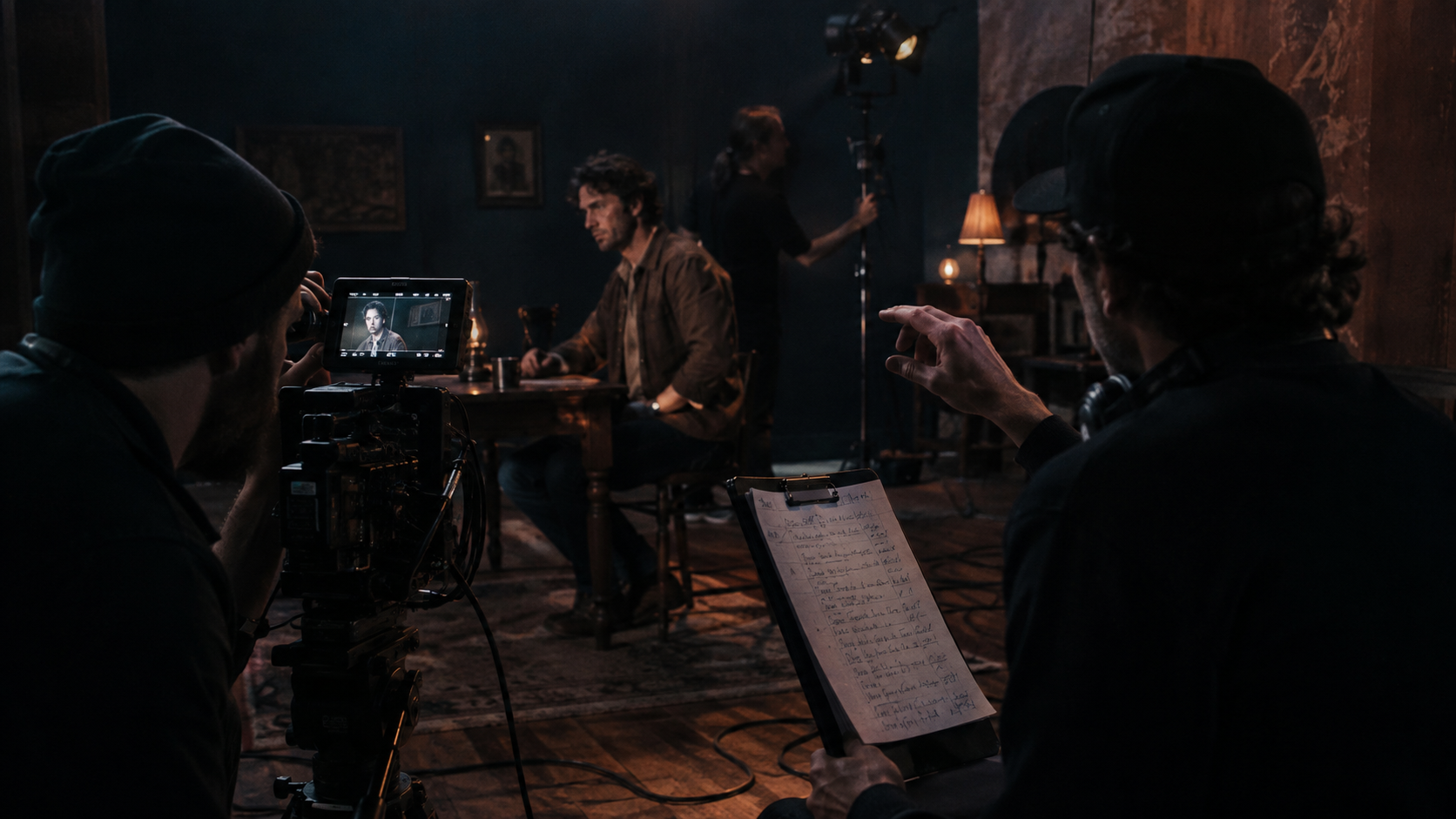
This is also a creative advantage. When the process is real, there is something to show: the maker, the set, the work-in-progress, the reason a choice was made. Provenance is not a badge added after the campaign. It is material for the story the audience was asked to believe in the first place.
The first place to put this discipline is in the brief. Add a short field for the intended public statement about AI and authorship. Then name what must be true at delivery for that statement to remain accurate. A phrase such as “human-led” is not enough. The team needs to know whether it refers to direction, final copy, performance, image creation, or review.
Make exceptions visible without making them dramatic. A campaign may need a localization tool, an accessibility adaptation, or an emergency revision. Record the exception, decide whether it changes the public claim, and give someone authority to stop the claim if it no longer fits. That is safer than treating an exception as a private technicality.
Procurement matters here too. Outside agencies, creator partners, stock providers, and production vendors can change the provenance of a campaign even when an internal team has a clear policy. The contract and approval process should ask the same questions the brand asks itself: what is being delivered, which tools were material, and what evidence exists if the customer promise is challenged?
Finally, review the claim at the speed the workflow changes. A standing brand promise should not depend on a launch-time checklist that nobody revisits. New tooling, a new vendor, or a new campaign format can alter the scope. A short scheduled review is enough to catch drift before the audience does.
The review should end with a decision, not a vague note that the team has discussed AI. Keep a simple record: the public claim, the work it covered, the evidence checked, any exception, the owner, and the next review date. That gives a CMO a fast answer when a client, platform, or journalist asks what the label means. More importantly, it gives the next campaign a precedent instead of starting the argument over.
This is where the no-AI paradox resolves. The goal is not to prove purity across an entire enterprise. It is to make the customer-facing promise honest at the exact point where it carries value. Brands that can do that have more than a position in the AI debate. They have a creative standard that can survive contact with their own workflow.