
Google AI Overview Liability Is Now Your Compliance Problem
The court decision is the headline. The operational advantage is being able to prove what the AI said about you before the answer changes.
A false AI Overview claim becomes actionable only after someone can show the exact claim, the exact search, the exact time, and the response that followed.
The Regional Court of Munich treated Google's generated claims as Google's own content in a May 28, 2026 decision. Google is challenging it. The monitoring and evidence program is still the right move because the record is useful long before a legal theory becomes final.
Somewhere above the first organic result, Google's AI is answering questions about your brand in its own words. When it is wrong, most companies still have nobody assigned to the answer.
A German court made that ownership gap a liability question with a docket number. In a preliminary decision dated May 28, 2026, the Regional Court of Munich prohibited Google from spreading false AI Overview claims about two publishing companies. The Overviews had linked the publishers to scams, subscription traps, and dubious business practices. The cited sources did not say those things. The system had made its own connection.
The court's reasoning is the important part. It did not treat the Overview as a neutral index entry that a user should independently verify. It treated the generated statement as Google's own substantive content. That matters because only Google can change the system producing the answer, and a platform's response after notice can become part of the evidence. The Transparency Coalition hosts the decision and case material; Google is challenging the ruling.
This is the third Dellons piece on the Munich cluster. For the court's legal logic, read the full ruling analysis. For Google's platform-level exposure, read the liability-trap analysis. This article is about the operator's program: the routine a brand, marketing-ops, and compliance team need before the wrong answer becomes a late discovery.

Why this is a compliance job, not an SEO ticket
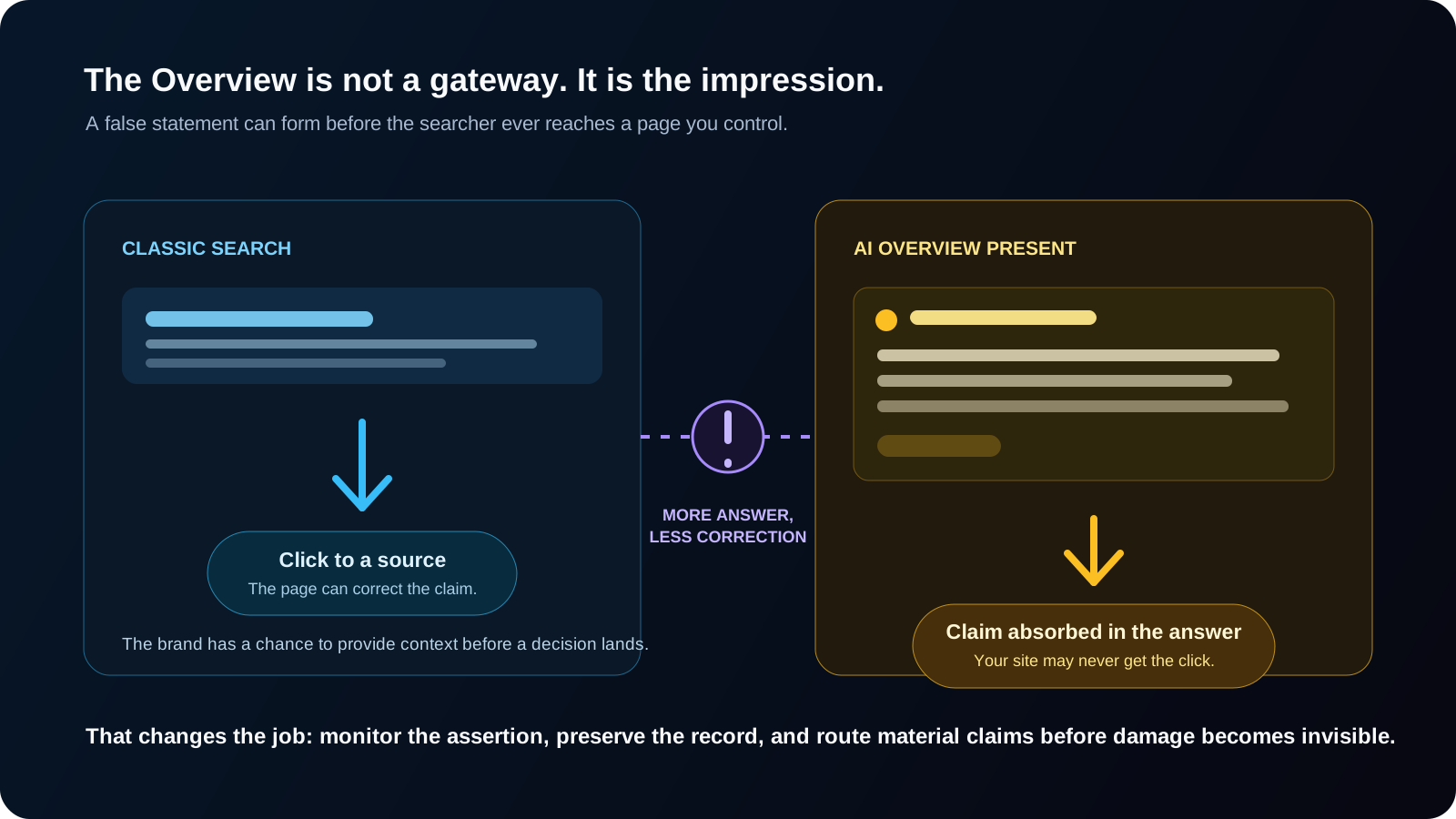
It is tempting to send every AI Overview concern to the search team. The data says that misreads the surface. Semrush tracking found AI Overviews appearing on roughly a quarter of Google queries at their 2025 peak and still around one in six later in the year, with a strong skew toward question-shaped searches. Those are the searches where a buyer is asking whether a brand is legitimate, safe, regulated, or worth trusting.
Then there is the click behavior. Ahrefs measured clicks to top-ranking results falling by more than half when an AI Overview appears. Pew Research separately found that users click through to sources far less often when the answer is present. A false claim can therefore do its work without ever creating the web session, support ticket, or reputation alert that would normally reveal it.
SEO still belongs in the room. It knows the categories, queries, and competitor context. But a compliance program owns the questions SEO software was never designed to answer: what was asserted, did it cross a regulated boundary, who assessed the claim, when did the platform receive notice, and what is the escalation threshold? The workflow belongs at the seam, not in one department's backlog.
The exposure map for regulated industries
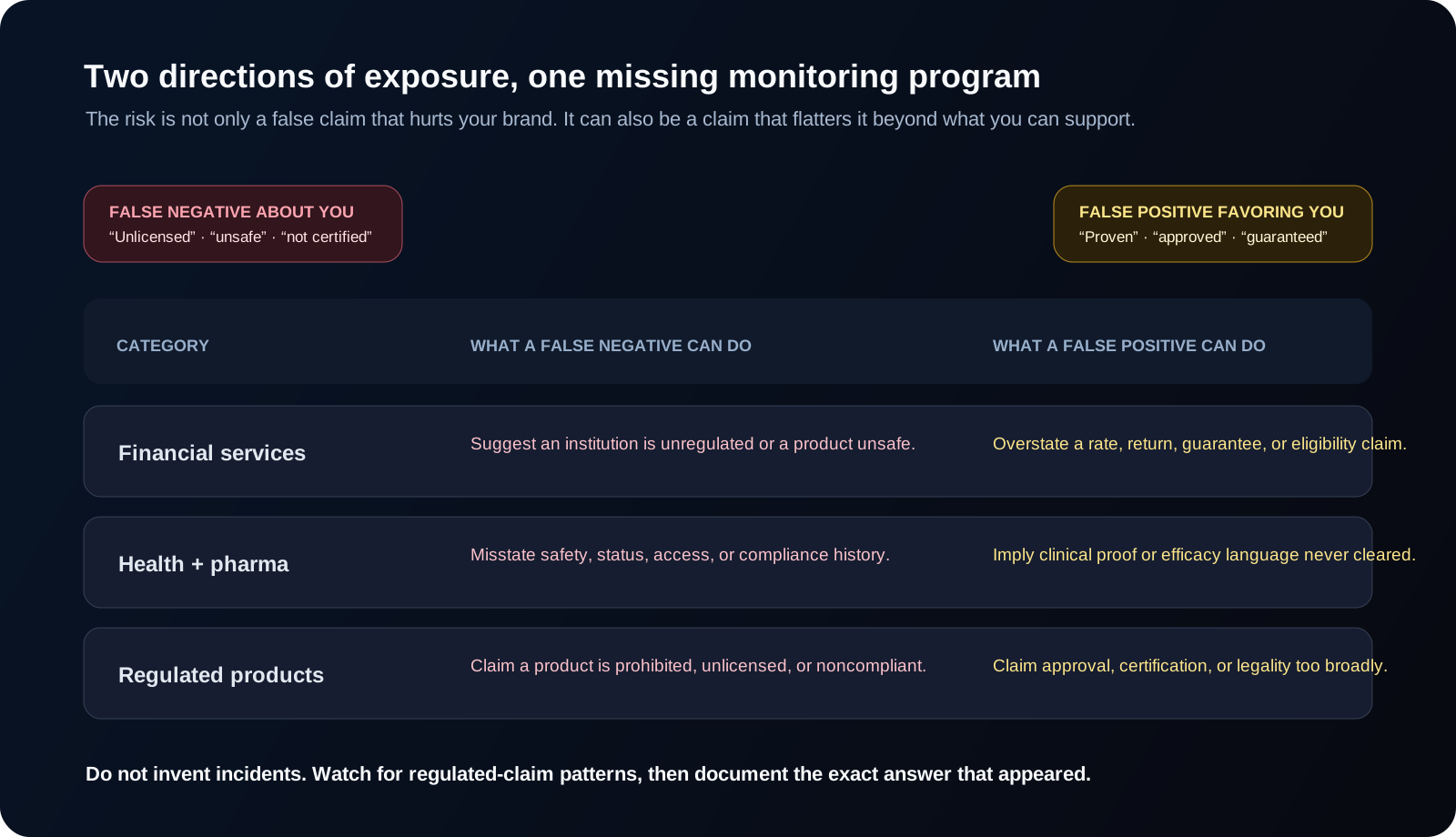
The risk concentrates around the kinds of claims a human in your industry would normally send through legal review: legality, licensing, safety, certification, efficacy, rates, eligibility, or approval. The important distinction is direction.
False negative about you
An Overview can imply that your product is unsafe, unlicensed, prohibited, uncertified, or noncompliant. The commercial harm is immediate, especially when the searcher was already looking for reassurance.
False positive favoring you
An Overview can overstate approval, efficacy, certification, return, or guarantee. The result may sound flattering, but it can introduce claims your own compliance process would never have approved.
Do not overstate the evidence. There is not yet a public body of resolved cases across every regulated category, and this article will not invent one. What exists is the Munich precedent, an answer surface that can absorb an assertion before a click, and familiar claim categories that already matter in regulated marketing.
The practical response is to watch patterns rather than manufacture a scandal. Define which claim types are consequential for your business. Ask compliance what a human is not allowed to say without review. Those phrases belong in the query set and the escalation policy. For more context on the second direction of risk, see AI personalization liability in regulated markets.

Monitor, document, dispute, escalate
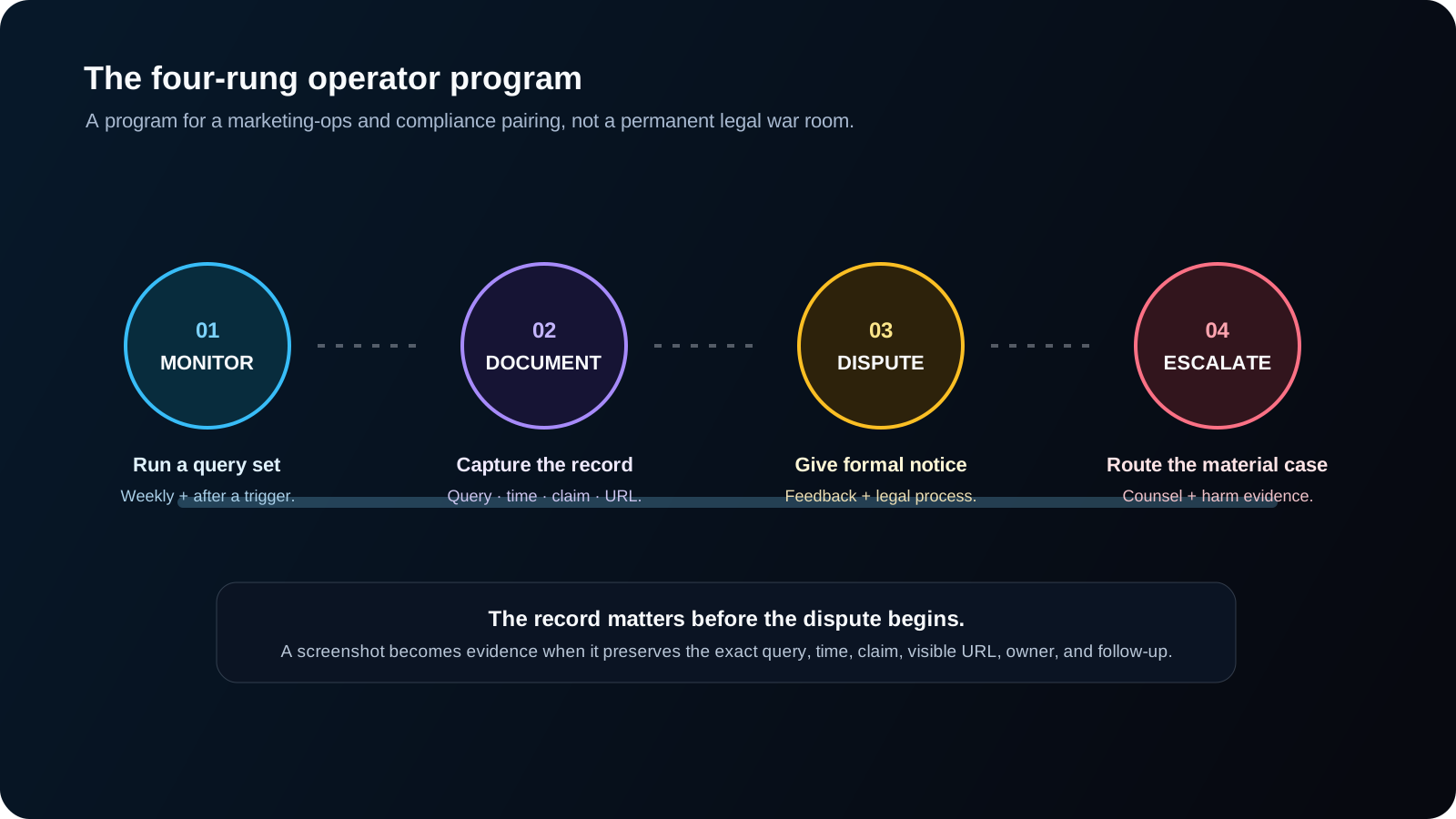
The right program is deliberately small. Define a query set containing brand and product names, category terms, and question-form searches where AI Overviews concentrate. Run it weekly from clean sessions, then add an event-triggered run after a launch, PR event, competitor incident, material product change, or regulatory change. Log when an Overview appears, what it asserts, and what it cites.
Then impose an evidence standard. A capture should preserve the exact query, timestamp, visible URL, the answer text or a faithful image, cited sources, who reviewed it, and the factual basis for calling it false. Store it in a shared register, not in a personal folder. A six-month register can show a pattern, a notice history, and a timeline of remediation. A loose screenshot cannot.
Use the platform's channels on the record. Every Overview offers feedback, and Google maintains a formal legal removal process for defamatory or unlawful content. Preserve each submission and response. The point is not to guarantee a rapid takedown. The point is to create provable notice. In the Munich case, the publishers' effort to notify Google and Google's inadequate response mattered.
Finally, use an escalation ladder rather than turning every error into a lawsuit. Feedback first. Formal legal request second. A legal letter when the claim is false, damaging, persistent, or in a high-consequence category. Counsel then evaluates jurisdiction, damages, and remedies. Most incidents should stop earlier. The ladder exists so the rare serious case arrives with a record, not a story.

The appeal changes nothing about Monday
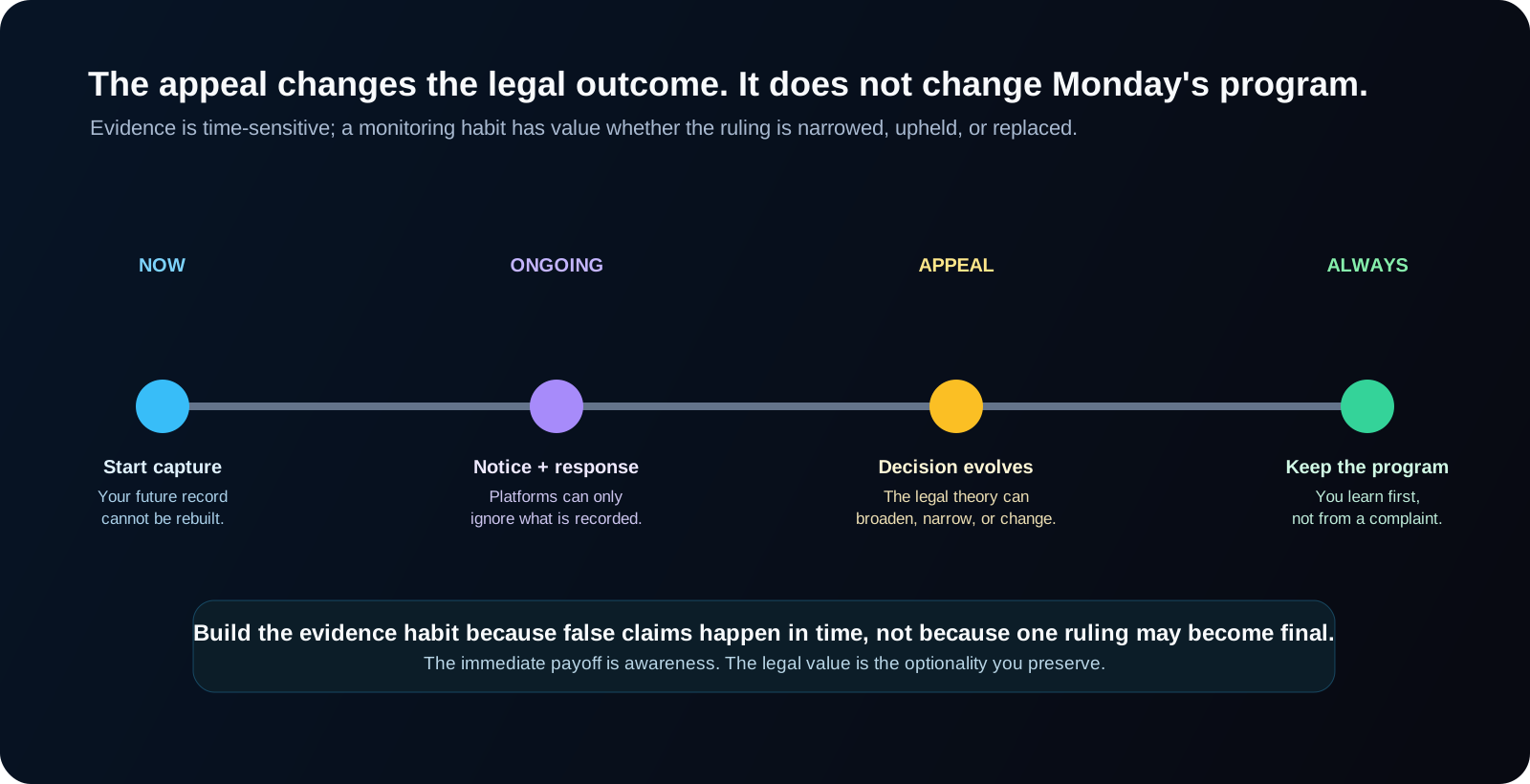
Google is pushing back on the Munich decision, and an appeal could narrow or overturn it. That does not make the operator program premature. Evidence is time-sensitive. You cannot reconstruct an Overview that disappeared last quarter, or prove when the platform received notice, by deciding to care after a legal theory becomes settled.
There are three reasons to build anyway. First, a register preserves optionality if the precedent holds or develops. Second, the underlying direction is broader than one case: courts are increasingly asking who is responsible when a company's AI makes a false customer-facing statement. The Air Canada chatbot decision is a familiar example of the same accountability instinct. Third, the immediate payoff is awareness. Finding a false claim before a customer, investor, or journalist does is useful even if nobody ever sees a courtroom.
The Munich court ended one convenient answer: “the AI said it, so nobody is responsible.” Responsibility is being assigned. The choice a compliance team controls is simpler. When the wrong answer appears at the top of a search page, are you holding an organized record or a screenshot someone took too late?
Source notes
FAQs
What did the German court actually rule about Google AI Overviews?+
The Regional Court of Munich, in a preliminary decision dated May 28, 2026, prohibited Google from spreading false claims that its AI Overviews made about two German publishers. The court treated the generated overview as Google’s own content rather than a neutral pointer to third-party pages. Google is challenging the ruling.
Does the Munich ruling apply outside Germany?+
The injunction itself is German. Its reasoning is nevertheless relevant elsewhere because it turns on a general question: when a platform generates a new substantive statement, is it acting as a content provider? Comparable decisions, including the Air Canada chatbot case in Canada, show that courts can hold companies responsible for what their customer-facing AI says.
How do I find out what AI Overviews say about my brand?+
Create a recurring query set: your brand and product names, category terms, and high-risk question searches such as legitimacy, safety, approval, certification, and regulation. Run it on a schedule and after launches or incidents. When an Overview appears, capture the exact query, time, visible URL, assertion, cited sources, and the person who assessed it.
What should I do if an AI Overview makes a false claim about my company?+
Capture the claim before it changes, including the query and timestamp. Preserve the factual basis for calling it false. Use Google’s Overview feedback path and formal legal removal process when appropriate, keep copies of submissions and responses, and escalate material or persistent cases with counsel. A dispute is much stronger when notice and inaction are documented.
Is AI Overview monitoring really a compliance responsibility rather than SEO?+
It is both, but the operating owner should include compliance. SEO can help define the query set, but a false assertion about safety, certification, legality, efficacy, or financial terms creates reputational and legal exposure that a rankings report cannot explain. The workflow needs evidence standards, a dispute record, and an escalation threshold, not only keyword tracking.
The future of AI search is not the best answer.It belongs to whoever can own the claim when the answer is wrong.