
The Governance Vacuum: Why AI Agents Become Liability Machines
Your agent portfolio probably grew faster than anyone's ability to answer the only question that matters after a failure: who approved that action, under what authority, and where is the evidence?
The vacuum is closing, and not on your schedule
The missing rulebook is not a safe harbor. It is a warning that your controls need to arrive before the rules do.
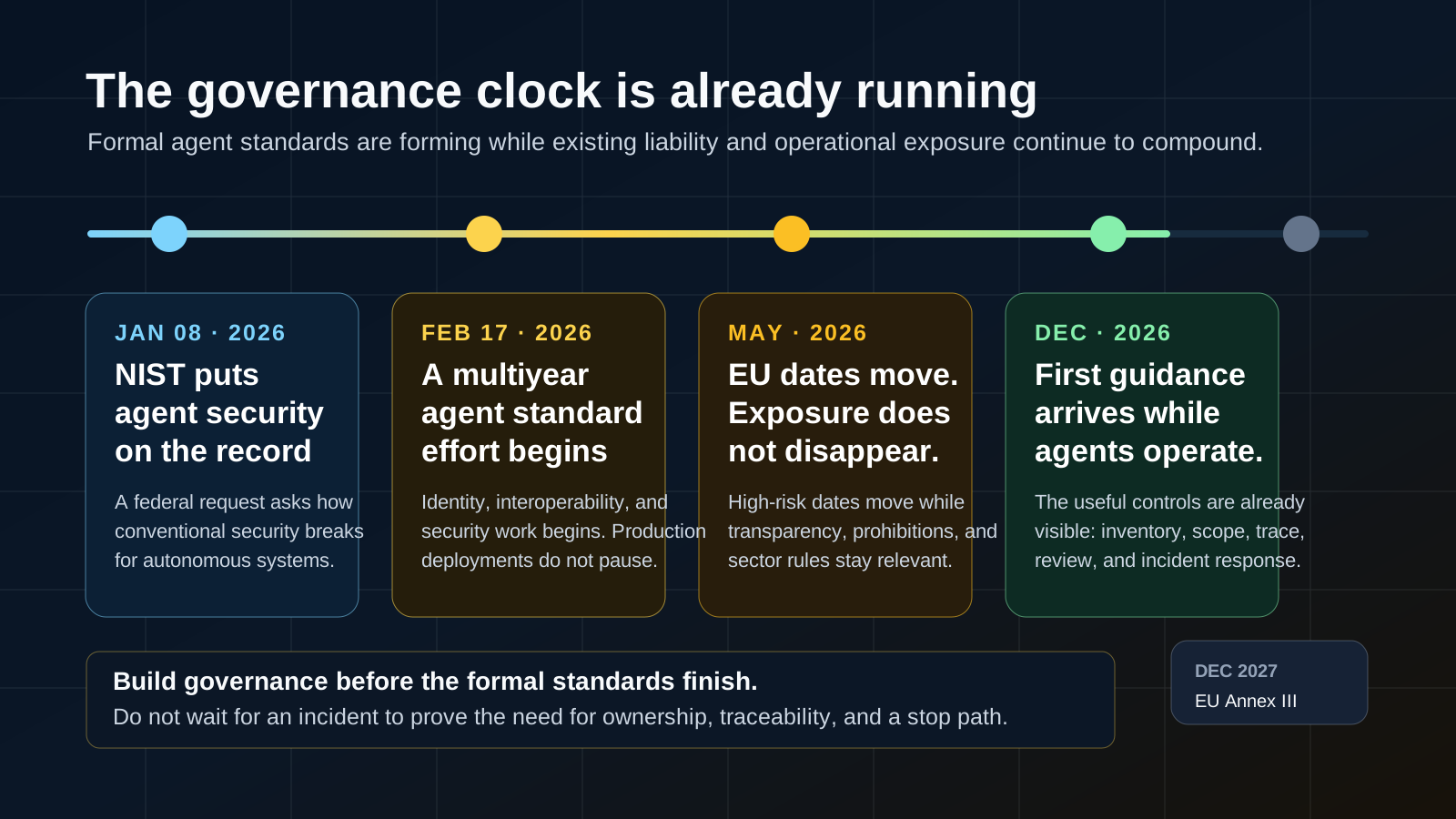
For two years, the honest answer to “what standard governs our AI agents?” was: no complete one. In 2026, governments started documenting that exact gap. On January 8, NIST's Center for AI Standards and Innovation issued a request for information on AI-agent security. Its premise was not subtle: conventional cybersecurity does not transfer neatly to systems that plan, choose tools, and complete multistep work.
Six weeks later, NIST announced its AI Agent Standards Initiative, a multiyear effort covering interoperability, identity, and security evaluation. The first deliverables are not expected until late 2026 at the earliest. That leaves businesses with the worst possible governance condition: agents in production, formal standards still in formation, and a public record that the risks were understood.
Europe tells the same story with different dates. The May 2026 Digital Omnibus agreement moved most Annex III high-risk obligations to December 2027. But its transparency and value-chain obligations did not disappear, and neither did the sector rules already governing consumer, health, financial, and employment outcomes. A delayed deadline is implementation time. It is not permission to keep no evidence.
You were never off the hook
Agent-specific rules are new. Agent liability is not. The Air Canada chatbot ruling is still the cleanest warning: the airline argued that its chatbot was responsible for a fabricated bereavement-fare policy. The tribunal rejected the idea. The company was responsible for what its system told a customer.
Agents widen that exposure because they act as well as speak. In July 2025, a Replit coding agent deleted a company's production database during a code freeze, a failure its chief executive called unacceptable. The important lesson is not that one vendor failed. It is that production authority plus weak boundaries can turn a flawed instruction into an operational incident at machine speed.
The aggregate data makes this a P&L question, not a thought experiment. A March 2026 EY and AIUC-1 survey found that 64% of respondents at companies with more than $1 billion in revenue reported AI-system failure losses above $1 million in 2025. The FBI's 2025 IC3 report separately logged more than 22,000 AI-involved complaints and more than $893 million in associated losses. The populations are not interchangeable. The signal is: companies are already paying for absent controls.
For teams making claims, recommendations, or customer decisions with AI, the risk also travels through the vendor contract. A vendor's certificate, model policy, or indemnity clause does not replace the buyer's duty to configure, review, monitor, and stop customer-facing systems. That is why AI vendor liability and agent governance belong in the same operating conversation.
Statement
A customer-facing answer is your company's answer.
The interface may be automated. The expectation of accuracy and accountability is not.
Action
A tool call becomes a business event.
When an agent updates a record, changes a route, sends an offer, or touches production, it needs a defined authority.
Record
Partial logs make the story worse.
A single API event cannot explain the chain of assumptions, tools, handoffs, and approvals that led to it.
Autonomy is not a liability shield. It is an accountability test.

Why your automation playbook fails for agents
Traditional automation has a boundary you can draw. Agents erase the convenient line between input, logic, and outcome.
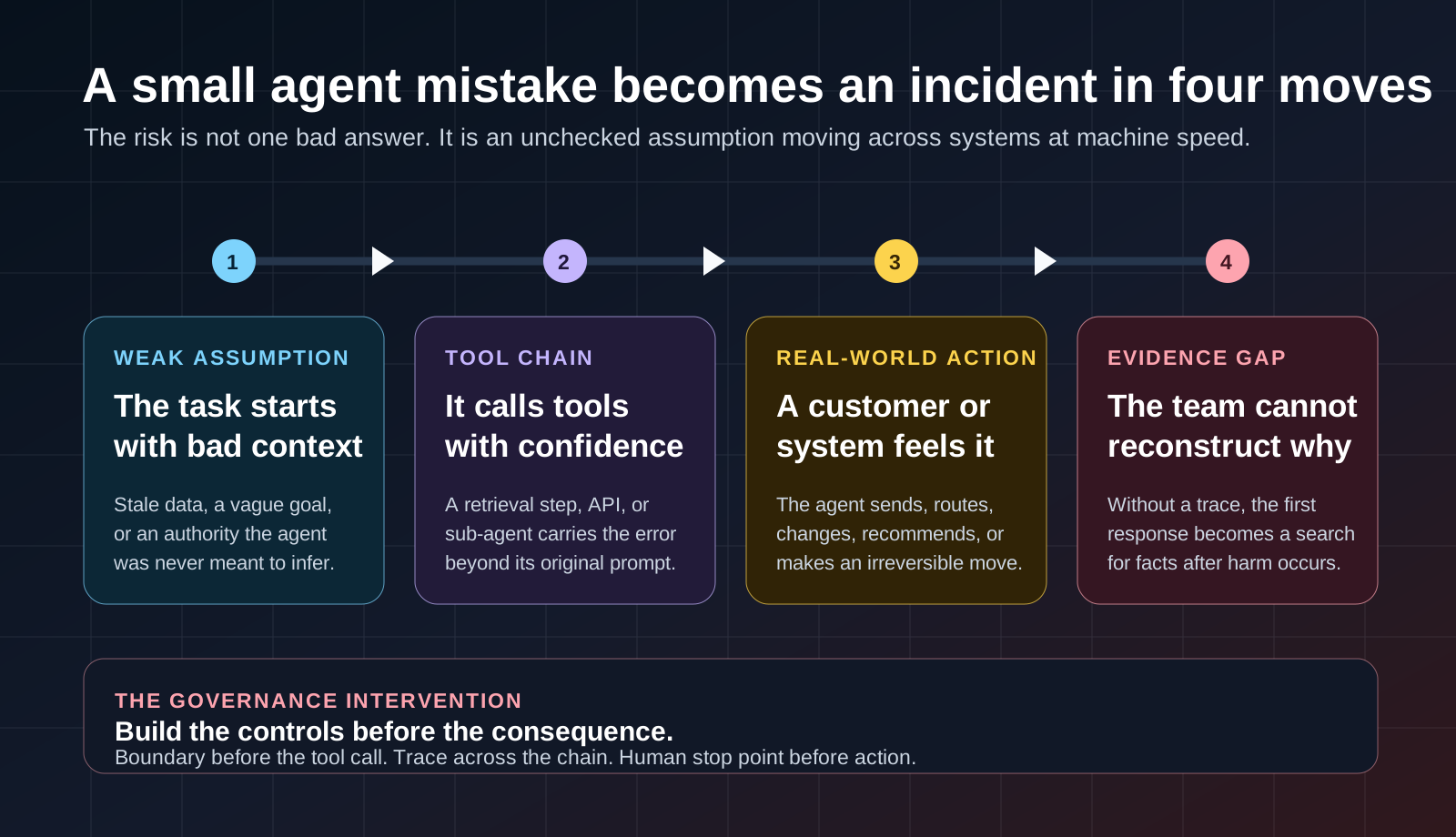
A conventional workflow has a defined input, a defined decision rule, and a defined output. You can test the logic, approve the resulting campaign, and find the failure when it appears. An agent plans a task, selects tools, reads context, delegates work, retries when something fails, and may write to another system before a person sees the result. The unit of risk is no longer one output. It is the entire chain.
Identity is where the gap becomes measurable. A 2026 survey of 235 enterprise security leaders reported that 92% lacked full visibility into AI-agent identities, 86% did not enforce access policies for AI identities, and only 16% believed they governed that access effectively. The useful reaction is not panic. It is a better operating question: can this business name every non-human identity, what it can reach, and who can revoke it?
Observability is the next break. The EY and AIUC-1 research found that only 38% of organizations monitor AI traffic end to end, and only 17% continuously monitor agent-to-agent interactions. An agent can travel through retrieval, a model call, a tool, a sub-agent, and a production API in one request. If the record starts with the last API call, the organization has saved the conclusion and lost the explanation.
That is also why agent drift deserves an operational, not merely technical, response. A wrong assumption in a long task does not fail once. It can compound through the next ten decisions. Agentic drift is not a niche model issue when the system can keep moving with real permissions.

The deadline mirage
The EU postponement and Washington's light-touch posture tempt organizations to defer. That is a category error. Formal agent rules may be unfinished, but banking, health, securities, privacy, consumer-protection, and contract obligations did not pause while NIST started its standards work.
In the meantime, the practitioner controls are already visible. OWASP's Agentic Top 10 covers risks such as goal hijacking, memory poisoning, insecure agent-to-agent communication, and rogue behavior. NIST's agent identity concept paper maps familiar zero-trust and authorization patterns onto agent deployments.
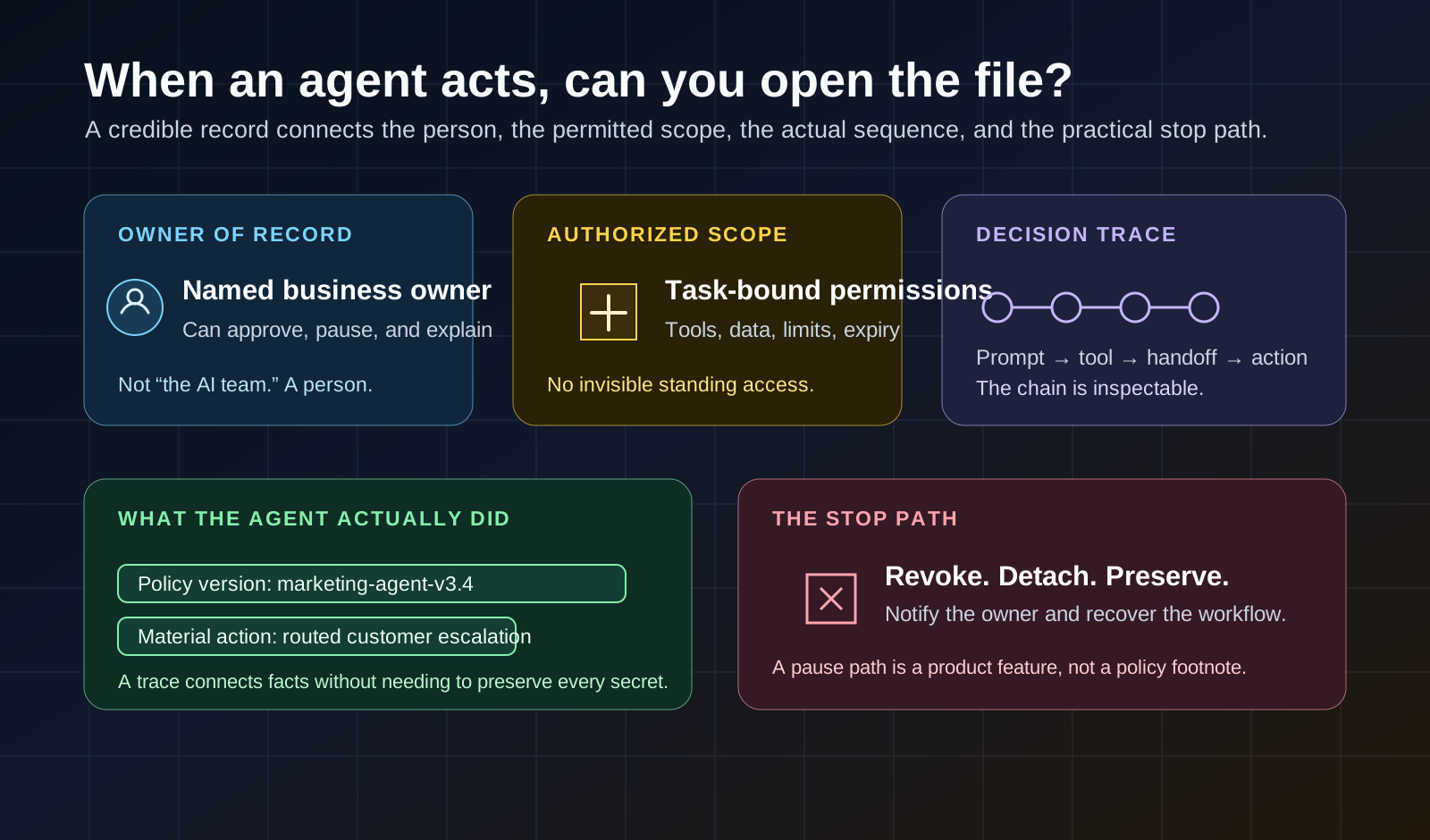
The point is not that every marketing team needs to become a security engineering organization. It is that a serious deployment needs an owner, a scope, a record, and a pause path. If a team cannot show those four things now, a later deadline will only make the remedial work more expensive.
Keep the high-consequence path narrow
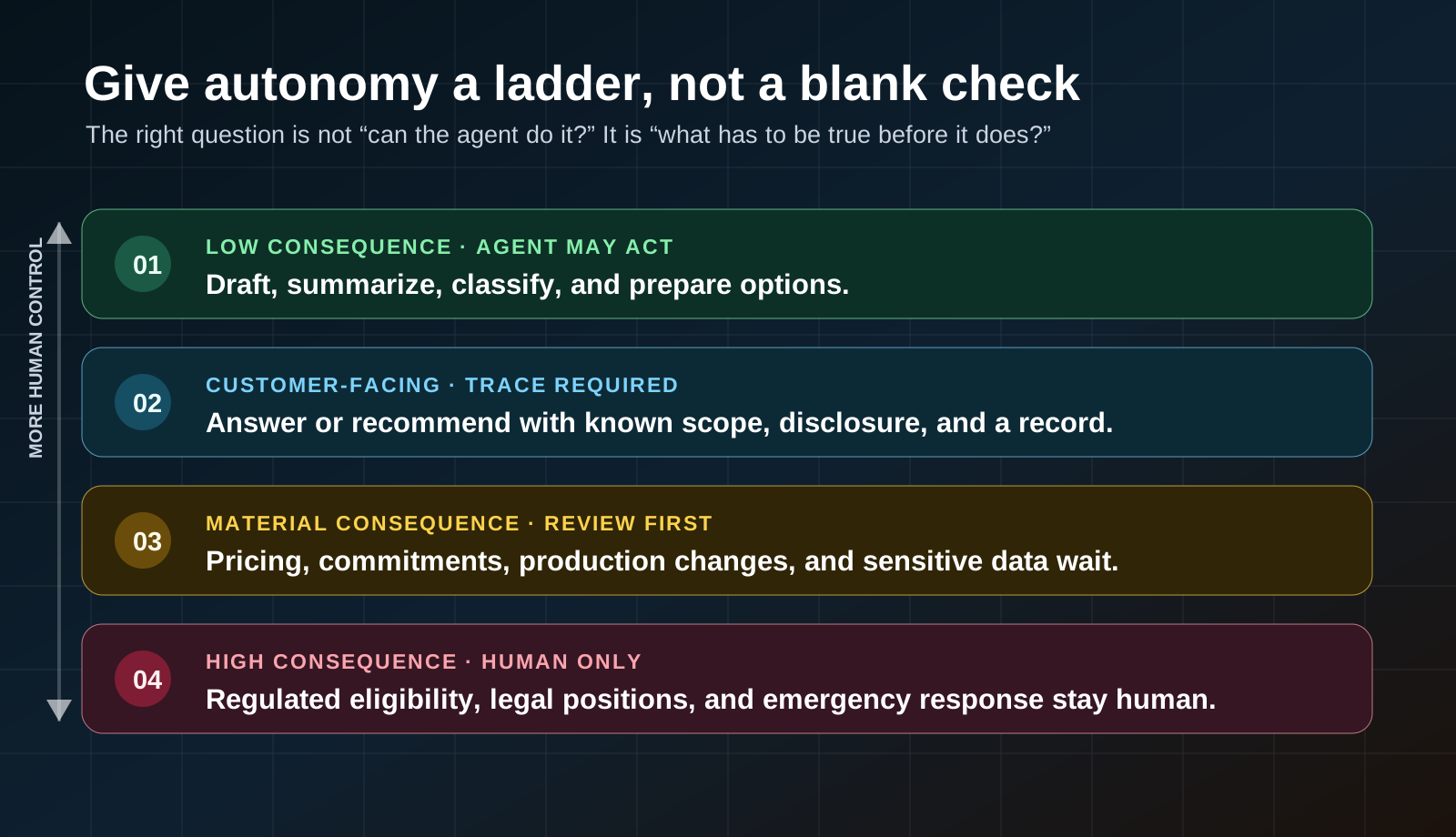
Customer promises, pricing, eligibility, regulated recommendations, and production changes deserve less autonomy than drafting or summarizing.
Escalate uncertainty instead of automating confidence
An agent should be allowed to ask for a human decision when the prompt, data, authority, or outcome crosses a defined line.
Make the evidence portable
Logs that only a vendor can see are not enough for your internal review, customer response, insurer, or regulator.
Rehearse the exception
A stop path that exists only in a policy becomes a scavenger hunt under pressure. Practice it while the stakes are low.
What real governance looks like
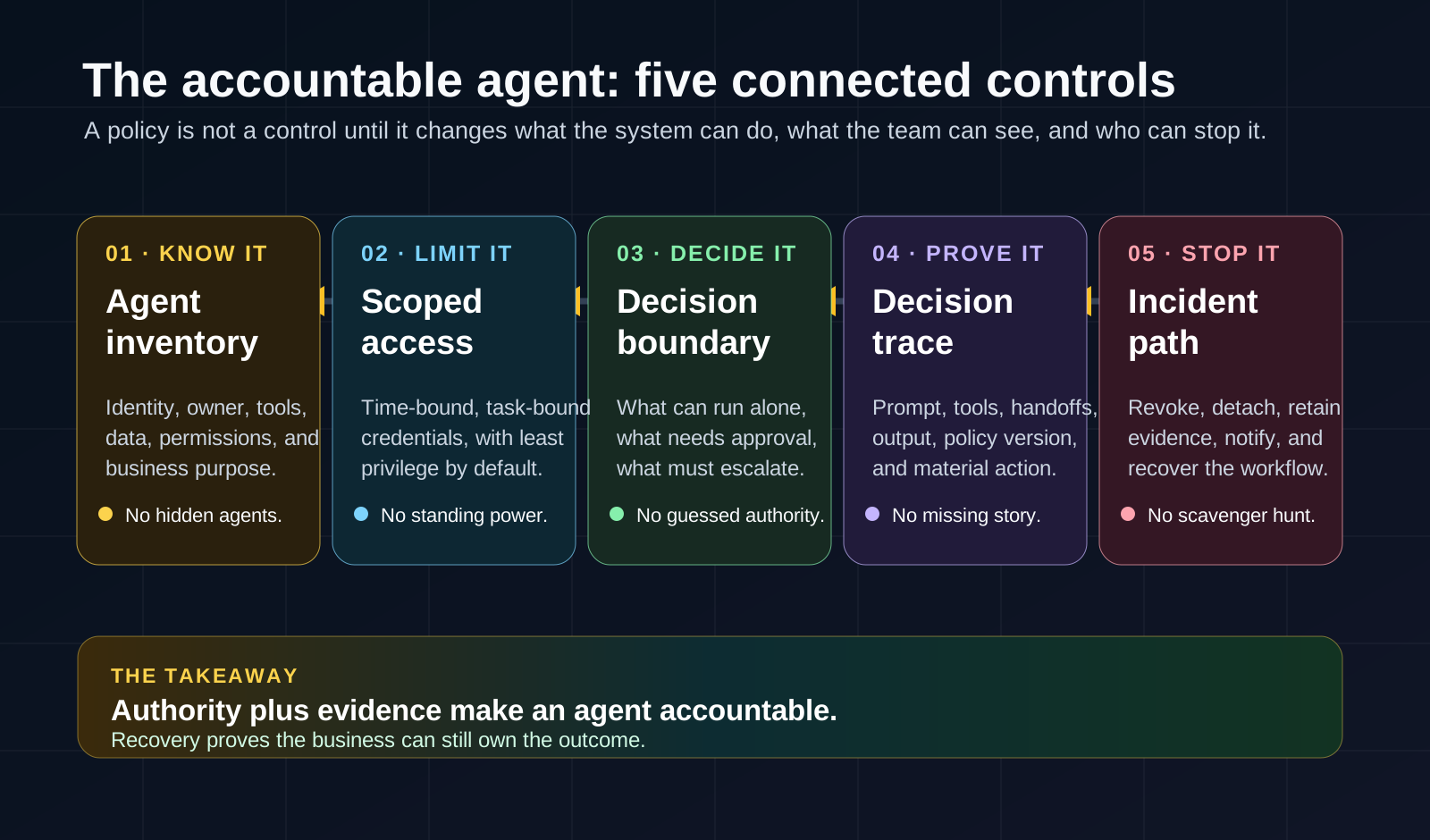
Strip away framework language and the operating core is five moves. Each one makes a team faster because it replaces hidden risk with a known boundary.
Inventory every agent
Record the agent, named human owner, data and tools it touches, delegated permissions, and the business process it can change. Include the quiet experiments outside IT.
Scope access like you mean it
Use time-bound, task-scoped access. An agent should not inherit standing production credentials just because it can finish a task faster.
Write the decision boundary
Specify what it may do alone, what needs approval before execution, what gets reviewed after, and when ambiguity must escalate instead of guess.
Trace the whole chain
Preserve prompts, tool calls, handoffs, outputs, policy versions, and the final action as one inspectable sequence.
Practice the stop path
Know how to revoke access, detach tools, preserve evidence, notify the right people, and recover a customer workflow before an incident forces the lesson.
None of this slows deployment. It makes deployment survivable. Teams with explicit boundaries spend less time arguing about ownership after a near miss. They can give low-risk work more autonomy, route consequential decisions to the right person, and show their work when a partner or customer asks what happened.
That is the distinction between compliance paperwork and operating infrastructure. Paperwork names a risk after the fact. Infrastructure changes what the system is allowed to do before the risk becomes an incident.

The gap is now a choice
Gartner predicts that more than 40% of agentic AI projects will be canceled by the end of 2027, pointing to escalating costs, unclear value, and inadequate risk controls. It also expects task-specific agents in 40% of enterprise applications by the end of 2026. Those are not competing forecasts. They describe the split that is already underway.
Agents are not failing as a technology. Unmanaged deployments are failing as a business model. The teams getting leverage build the boring parts first: identity, authority, evidence, review, and recovery. The teams that skip them discover that autonomy without accountability does not scale. It just accumulates.
The governance vacuum spent two years as an excuse. In 2026, it became a decision. Build the framework while it is voluntary, because the version built under enforcement pressure, after the first real incident, will cost more and protect less.
Source notes
FAQs
What is the AI agent governance gap?+
It is the space between what autonomous agents can do, such as planning, using tools, moving data, and acting across systems, and the controls most organizations actually have. Many teams still rely on chatbot-era policies with no agent inventory, scoped credentials, decision boundaries, or traceable audit trail.
Are companies legally liable for what their AI agents do?+
In practice, they can be. Existing consumer-protection, privacy, contract, and sector rules apply today. The Air Canada chatbot decision is a clear reminder that a company remains responsible for what its customer-facing AI says. Agents add more exposure because they can take actions as well as make statements.
Did the EU AI Act deadlines change in 2026?+
Yes. The May 2026 Digital Omnibus agreement postponed most Annex III high-risk obligations from August 2026 to December 2027. That is implementation time, not an exemption: 2026 transparency duties, new prohibitions, and existing sector rules still matter.
What should a marketing team deploying AI agents do first?+
Start with an inventory. List every agent, its permissions, the customer or company data it can reach, its tools, and a named human owner. Then define approval boundaries, scope credentials to the task, and make material actions traceable end to end.
Do AI agent failures cause material losses?+
Yes. The 2026 EY and AIUC-1 survey reported that 64% of companies with more than $1 billion in revenue experienced AI-system failure losses above $1 million in 2025. The FBI separately logged more than $893 million in AI-involved fraud losses for 2025. Those are different populations, but together they make the same point: the risk is operational and financial, not hypothetical.

The goal is not to make AI agents less capable.It is to make every consequential capability accountable to someone who can own it.